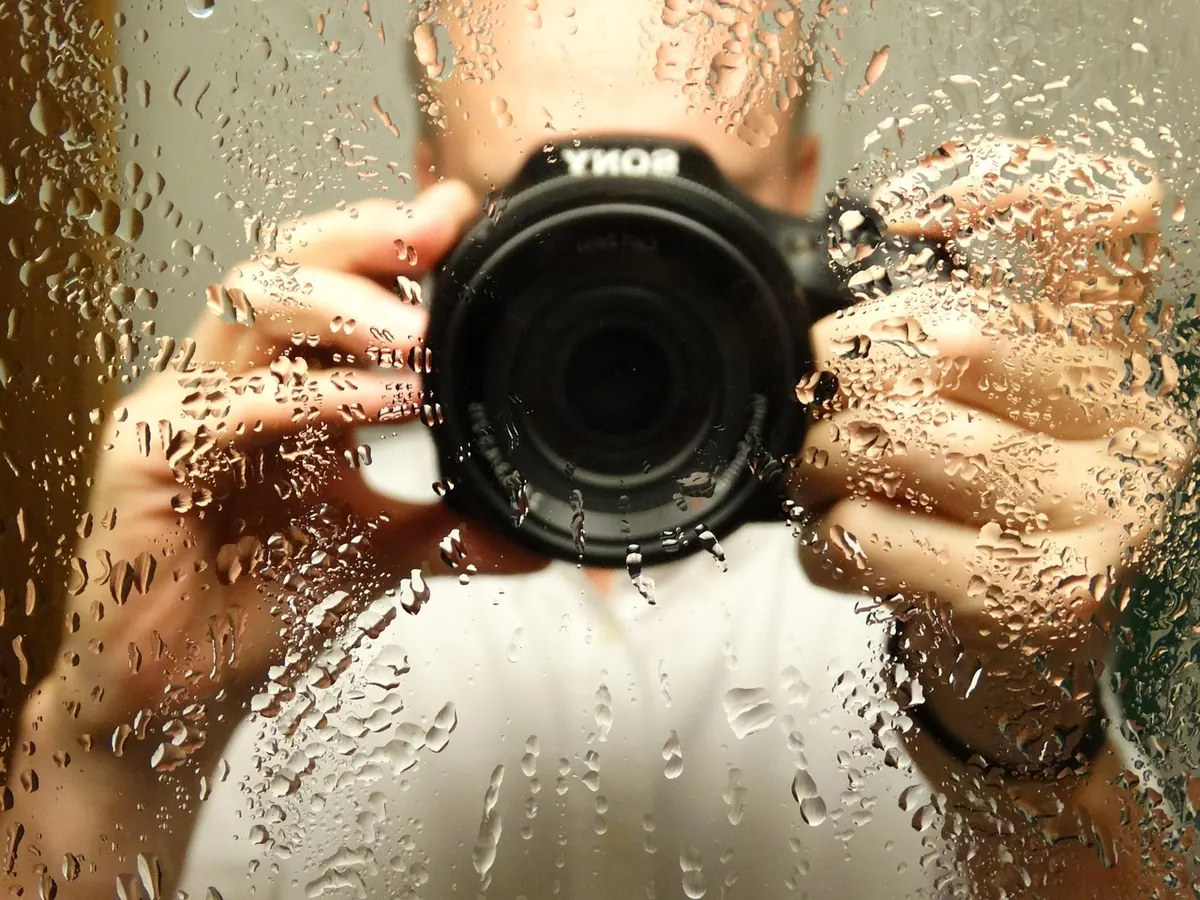
There is a particular kind of defeat in standing in front of a mirror you cannot see through. You have had a hot shower, you have ten minutes before you need to leave, and the glass is a grey rectangle of cloud. Winter makes it worse: the colder the mirror, the faster the moisture in the air condenses back onto its surface. Fog is not difficult to beat, though, and most of the fixes are cheap. Here is what genuinely works on a cold morning.
Why bathroom mirrors fog faster in winter
A mirror fogs when warm, humid air meets a cold surface. The air cannot hold all that moisture at the lower temperature, so it drops out as thousands of tiny droplets. Each droplet scatters light, and the reflection disappears behind them.
In summer, your bathroom walls and mirror sit at roughly room temperature, and the gap between the air and the glass is small. In winter, a mirror near an outside wall or a window can be several degrees colder than the rest of the room. Steam from the shower hits it and condenses almost instantly, and the layer of droplets is thicker and slower to clear.
That gives you three ways to fight back. Warm the glass so condensation struggles to form. Move the moist air out before it settles. Or change the surface so water spreads into an invisible film rather than beads. Most effective setups use two of the three.
Anti-fog sprays and coatings
Most ready-made anti-fog sprays work with a surfactant — the same family of chemicals that makes washing-up liquid cut through grease. Applied to glass, it lowers the surface tension so water spreads into a thin, transparent sheet instead of scattering droplets. The mirror stays slightly hazy perhaps, but you can see through it.
Application matters more than the brand. Follow these steps and a single treatment will usually last several days:
- Clean the mirror first with ordinary glass cleaner and a lint-free cloth. Soap scum, toothpaste splatter and limescale stop the coating bonding properly.
- Apply the product to a cool, dry mirror — not straight after a shower, when the glass is already wet.
- Use less than you think you need. A few sprays or a pea-sized amount of gel is plenty for a standard basin mirror.
- Buff it clear with a clean microfibre cloth until you cannot see any streaks or residue.
- Reapply every few days, or weekly if you shower at lower temperatures.
You can make a serviceable version at home with a small amount of shaving foam or a drop of washing-up liquid, rubbed on and buffed off. It works, but it streaks more easily and needs redoing more often. Whichever route you take, test it on a corner first if your mirror is tinted, acrylic, or an older piece with a delicate silvered backing — some coatings and abrasive cloths can do real damage. Never scrub with anything rougher than a microfibre cloth.
Heated mirrors and demister pads
A heated mirror is the most reliable answer if you want to stop thinking about fog altogether. There are three common forms: a complete mirror with a heating element built in, a self-adhesive demister pad fitted to the back of your existing mirror, and larger heated panels that also serve as bathroom heaters.
The principle is simple. Bring the glass a few degrees above the dew point and condensation cannot settle. Most pads run off the lighting circuit with a switch, a pull cord or a timer, so you switch them on before you get in the shower and the mirror is clear when you get out. A timer or motion sensor is worth having, because nobody remembers to switch it off.
Anything electrical in a bathroom has to be suitable for the zone it sits in, and wiring should be done by a qualified electrician. This is not a job for a Saturday afternoon with a YouTube video and optimism. If in doubt, ask an electrician to check what your bathroom can safely take.
Ventilation: the free fix most people skip
Fog is a symptom of trapped moisture, and every shower puts a surprising amount of water into the air. Get rid of the air and the fog has nothing to work with.
- Run the extractor fan properly. Switch it on before the shower and leave it running for at least fifteen minutes afterwards. A humidistat model does this for you.
- Check the fan is actually pulling. Hold a piece of tissue near the grille while it runs. If the tissue does not move, the fan or duct is blocked and cleaning the grille is the first thing to try.
- Crack a window for a few minutes afterwards, even in winter. It feels counterintuitive when you are cold, but a short burst of dry air clears a small bathroom faster than leaving the door shut.
- Air the room afterwards. Leave the door open once you have finished so moisture can escape into the rest of the house rather than settling on the walls.
- Warm the room before you shower. A warmer mirror fogs more slowly. Turning the heating on ten minutes earlier helps more than most people expect.
Shaving on a foggy morning
Steam softens stubble, which is why shaving straight after a shower feels easier, but it is also what ruins the mirror. There is a middle path.
Shave before the room fills with steam, using warm water in the basin rather than running a hot shower alongside it. Fill the basin only as deep as you need — a basin left full of hot water keeps pumping vapour into the air. Rinse the razor under a trickle rather than a gush, and turn the tap off between strokes.
Keep a small squeegee or a dry microfibre cloth within reach and wipe the mirror once, top to bottom, before you start. One clean pass clears more than a dozen little rubs with a damp hand. A small freestanding magnifying mirror on the windowsill, well away from the shower, is another practical trick; it stays clear because it is further from the steam and closer to the cold glass.
If your mirror sits directly above the basin, it collects steam from both the shower and the hot tap. That is the hardest position in the room to keep clear, so it pays to treat it rather than fight it.
A winter routine that keeps the glass clear
None of this needs to be complicated. Spend ten minutes on a Sunday evening: clean the mirror properly, apply a fresh anti-fog coating, and buff it off. Keep a microfibre cloth in a drawer by the basin for a quick wipe after each shower. Leave the extractor running while you dry off and get dressed, and crack the window if the room still feels damp. If your budget stretches to one upgrade, a demister pad on a timer solves the problem permanently for the price of a couple of takeaways.
Cold mornings will still arrive. But if the glass is warm, the air is moving and the surface has been treated, the fog will not be waiting for you when you get out of the shower.
Photo: 422737 / Pixabay