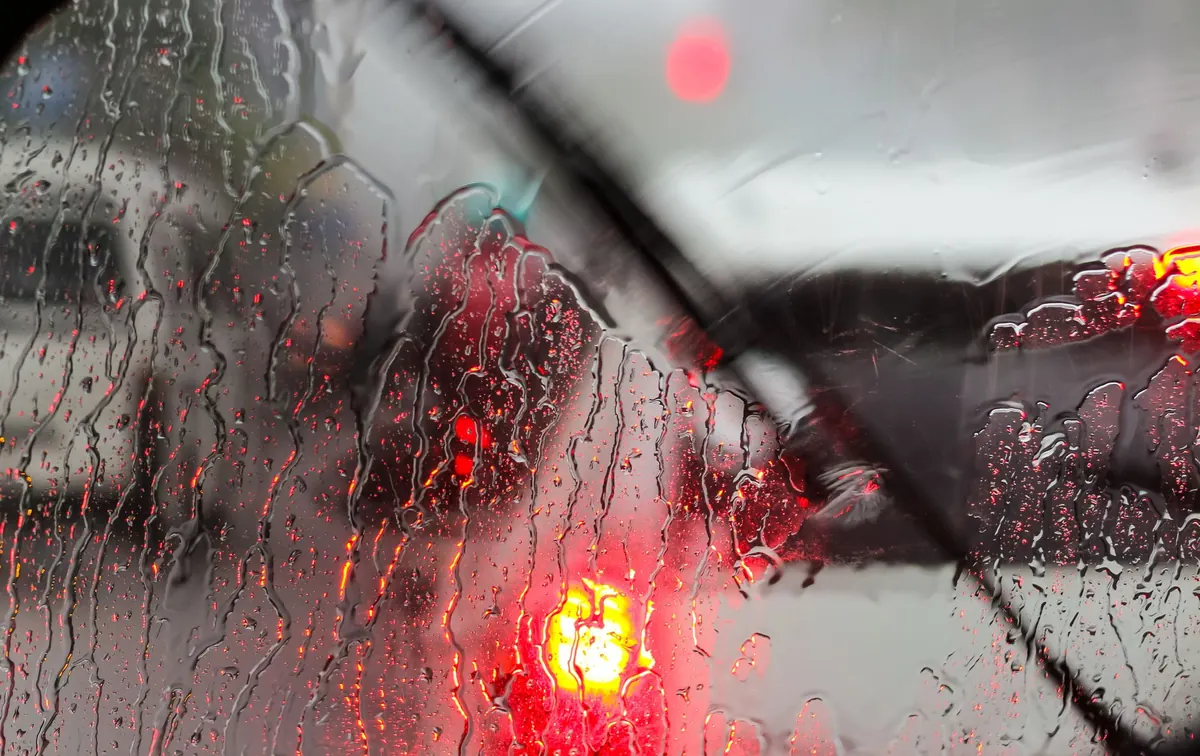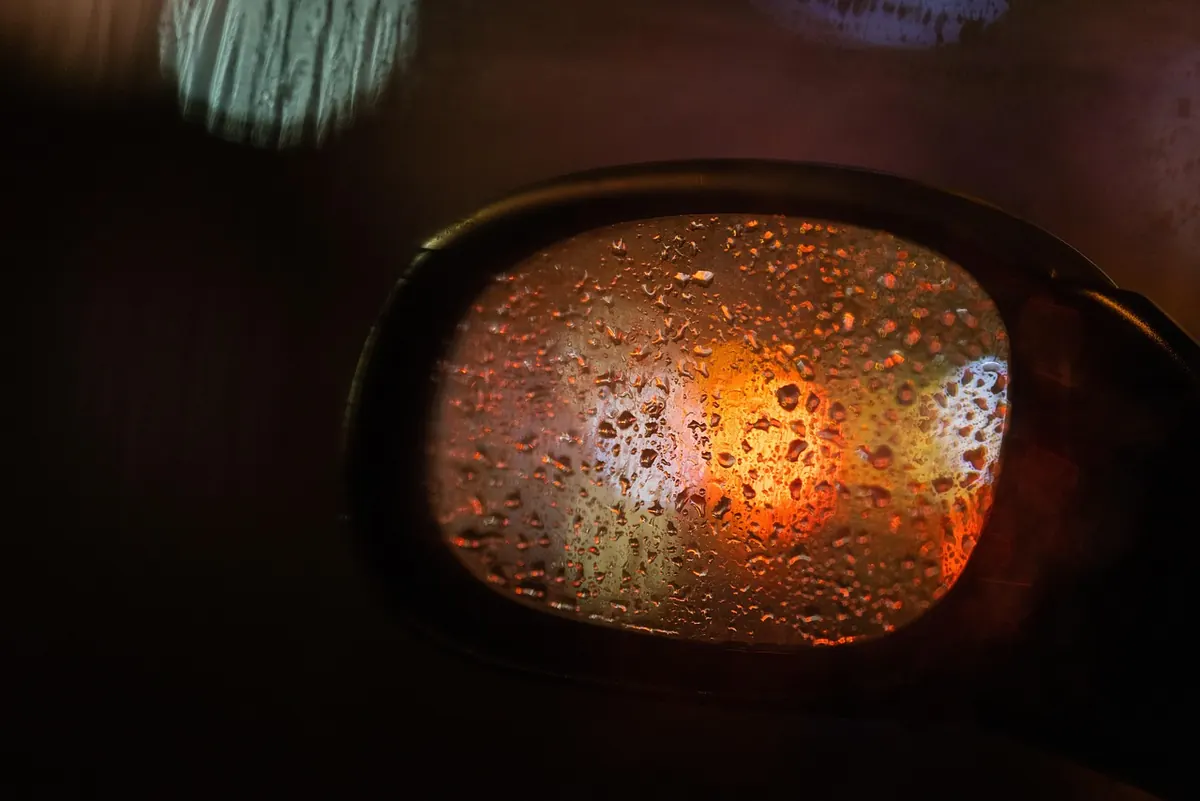
Rain rarely arrives when the car is clean and the mirrors are clear. It comes when you are already late, the glass is spattered, and the first thing you notice as you pull onto the bypass is that the door mirror has become a soft grey smudge where the lane behind you should be. Mirrors fog for boring, predictable reasons, and most of the fixes are just as predictable once you know which problem you are actually solving.
Why wing mirrors mist over in the rain
A mirror fogs when water vapour in the air condenses on glass that is cooler than the dew point. The door mirror sits out in the airflow with only a thin housing around it, so it sheds heat quickly, and in wet weather the air around it is close to saturated. On clear nights, glass also radiates heat towards the sky and drops a degree or two lower than the air. The result is a film of microscopic droplets that scatters light in every direction. The headlights behind you stop looking like headlights and become a shapeless glare.
Mist, beading and smear are three different problems
It pays to separate them, because a product that solves one can do nothing for the others. Mist is condensation: a thin, even film of droplets across the whole mirror. Beading is what rain and road spray do — larger droplets that sit on the glass and hold their shape. Smear is the dirty layer underneath both: traffic film, dust, wax from a car wash, the residue of a hundred motorway miles. Anti-fog treatments work on mist. Rain repellents work on beading. Nothing works properly over smear, which is why cleaning the glass first matters more than the bottle you choose.
Anti-fog sprays and wipes: what actually works
An anti-fog product leaves a very thin surfactant film on the glass. That film lowers surface tension, so condensing water spreads into a flat, transparent sheet instead of forming thousands of tiny lenses. It is not a force field — a downpour will still soak the mirror — but in drizzle, mist and cold damp mornings the difference in what you can see behind you is obvious.
How you apply it matters as much as what you buy:
- Clean the glass first with a normal glass cleaner and a microfibre cloth. Treatments cannot grip a dirty surface.
- Apply a small amount — two sprays on a folded microfibre is usually plenty. More product means more haze, not more protection.
- Let it dry to a light haze, following the time on the label.
- Buff it off with a clean, dry cloth until the glass looks clear. If you can see streaks in daylight, keep buffing.
- Reapply roughly once a week during a wet spell, and again after any wash that strips the film.
A packet of anti-fog wipes in the glovebox is a sensible backup for the morning you notice the problem too late. Test any product on a small corner of the mirror first: some formulas are intended only for glass and can mark the plastic housing or the painted mirror cap. Never lean out to wipe or adjust a mirror while the car is moving — pull over somewhere safe.
Heated mirrors: the fix your car may already have
Plenty of cars have heated door mirrors, and a surprising number of drivers do not know it. The element is bonded behind the glass and usually switches on with the rear window demister, though some cars have a separate button or a heating position on the mirror adjuster, and a few come on automatically in cold weather.
Heated mirrors are the tidiest answer to misting. They warm the glass slightly above the surrounding air, so condensation never gets a foothold, and a minute or two is usually enough to clear a fogged mirror without any product at all. What they cannot do is remove dirt, and heavy spray droplets will still sit there until airflow or a wipe clears them.
To check whether yours work, start the car on a cold, damp morning, switch on the rear demister, wait a couple of minutes and touch the mirror glass. It should feel gently warm. If it stays cold, suspect a blown fuse or a failed heating element. Replacement mirror glass with the element built in is available for many models, and fitting ranges from a few minutes' work to a job best left to a garage.
Rain repellents, and when they beat an anti-fog spray
Rain repellents are hydrophobic coatings. Rather than spreading water out flat, they make it bead so tightly that airflow blows it off the glass. At motorway speeds this is genuinely impressive: the mirror stays almost clear in heavy spray, with no heating needed.
In light rain and slow city traffic, the picture changes. Without enough airflow to blow the beads away, a rain repellent can leave a scatter of droplets sitting on the mirror, each one catching light from headlights and streetlamps. A patchy or worn coating is worse still, because some areas clear and others cling. That is why a rain repellent is best on side windows and mirrors when you do a lot of fast A-road and motorway driving, while an anti-fog treatment is often more useful for damp starts, drizzle and stop-start journeys.
Do not layer the two on the same piece of glass. Anti-fog films are designed to spread water; rain repellents are designed to make it bead. Using one over the other can produce a cloudy, uneven finish that does neither job well. Pick the treatment that matches the weather and driving you actually do, and if you want the best of both, keep the anti-fog for the mirror and use a repellent on the side glass where airflow can help.
A simple wet-weather mirror routine
Most fogging problems are solved before the car moves. A five-minute routine during wet spells keeps both mirrors usable without fuss:
- Clean first. Wipe each mirror with glass cleaner and a clean microfibre cloth. Pay attention to the edges, where traffic film collects.
- Check the heater. Switch on the rear demister and feel the mirror glass after a minute. If it never warms, book the repair or plan to use an anti-fog product.
- Treat if needed. Apply anti-fog spray or wipes according to the label, then buff until clear. Do this in daylight if possible so you can see streaks.
- Use the demister early. On a damp morning, switch on the heated mirrors before you need them, not after the mirror has already fogged.
- Repeat after washing. Car shampoo and wax removers strip treatments, so reapply after every wash during a wet spell.
Common mistakes that make mirror fogging worse
Some quick fixes create more glare than they remove. Avoid these habits:
- Wiping with a sleeve or bare hand. Skin oils and grit smear the glass and can scratch delicate mirror coatings.
- Over-applying anti-fog spray. A thick layer dries into a milky haze that is harder to see through than light mist.
- Using washing-up liquid as a shortcut. It leaves a sticky residue that attracts dust and can be difficult to remove completely.
- Applying rain repellent to a fogged mirror. It will not clear existing condensation and may trap dirt under the coating.
- Ignoring cracked or loose mirror glass. Moisture gets behind the glass, the heating element fails, and the mirror becomes a permanent problem.
- Adjusting or wiping a mirror while driving. A moment of blurred vision is not worth the risk; pull over safely if you must clear the glass.
If the mirror glass is loose, cracked, or the heating element has failed, no spray will restore a clear view. Fix the hardware first, then worry about coatings.
When to stop treating and start repairing
If a mirror fogs constantly even when the other side stays clear, the problem may not be the weather. A failed heating element, a blocked drain hole in the mirror housing, or a missing backing seal can let water sit behind the glass. In that case, cleaning and sprays are only masking the fault. Replacement glass for many popular models is inexpensive, and some fittings simply clip into place after you remove the old glass. If the mirror has electric adjustment, heating, or a camera and blind-spot monitor built in, check the connections carefully or let a garage handle it.
It is also worth checking the mirror switch itself. If the adjuster works but the heating does not, the fault is likely in the fuse, the element, or the wiring through the door loom. A quick continuity test at a garage can save you from buying parts you do not need.
None of this is complicated, but it does require choosing the right tool for the right failure. Clean glass, a working heater where you have one, and a treatment that matches your driving will keep both mirrors clear through the worst of a British wet spell. The alternative is the familiar grey smudge at the edge of your vision — and that is one blind spot you can easily avoid.
Photo: Engin_Akyurt / Pixabay